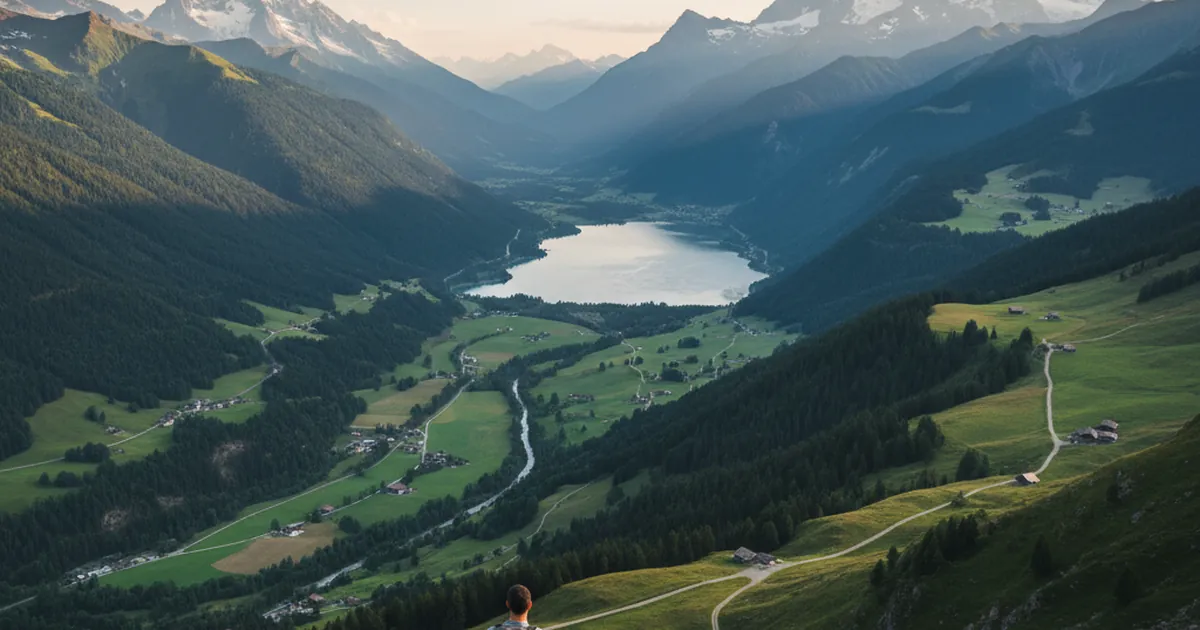
Haute-Savoie is big. From Lake Geneva to Mont Blanc, from Lake Annecy to the Faucigny, hiking in Haute-Savoie can mean very different things depending on the valley where you park your car. Limestone cliffs above a lake, pastures dotted with herds, vertiginous balconies above the Mont-Blanc glaciers: each massif has its own identity, terrain and optimal season.
To help you choose where to start, here is an overview of the six valleys that structure Yaute Rando. Each has its character, its starting points and its signature routes.
1. The Chablais — ridges above Lake Geneva
The Chablais massif covers the whole north of the department, between Lake Geneva and the Giffre valley. Listed as a UNESCO Global Geopark, it offers many family-friendly mountain lakes, panoramic ridges such as the Dent d'Oche or Roc d'Enfer, and the huge walker's domain of the Portes du Soleil around Morzine and Les Gets.
Ideal if you are coming from Geneva or Annemasse: access is fast, elevation gains moderate, and the lake view slips into almost every itinerary.
2. The Giffre Valley — limestone kingdom
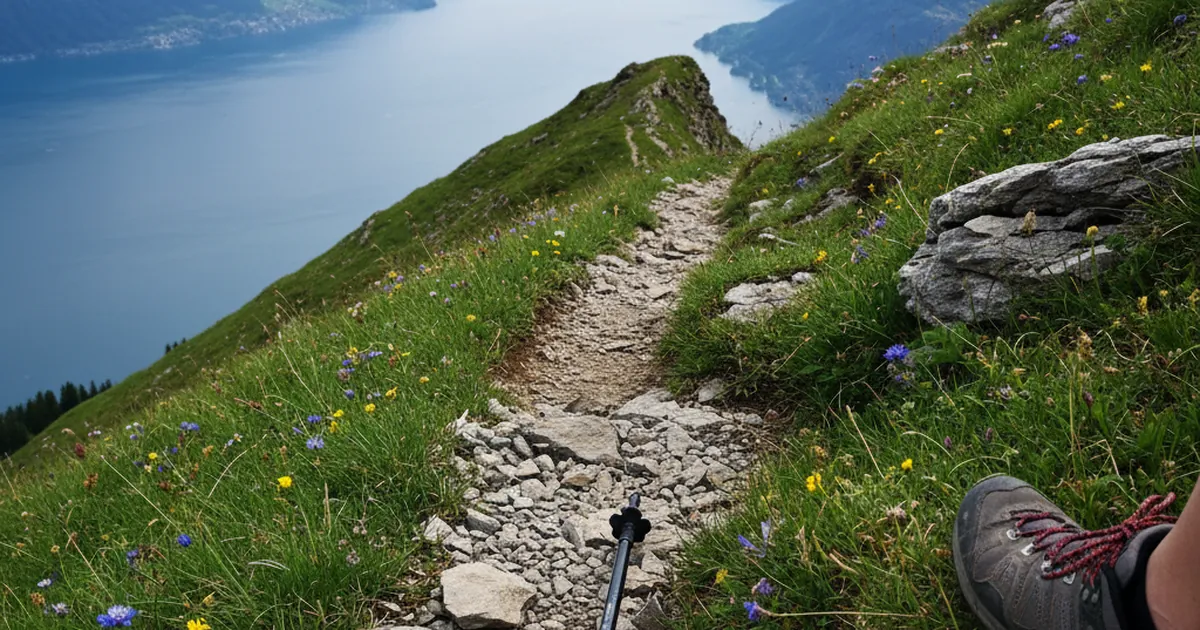
From Mieussy to Sixt-Fer-à-Cheval via Taninges, Samoëns, Verchaix and Morillon, the Giffre Valley unfolds a spectacular mineral scene: limestone cliffs, glacial cirques, a turquoise river, waterfalls overflowing at the thaw.
Two classics to begin with: the Pic de Marcelly above Praz-de-Lys, known for its 360° view over Mont Blanc, the Aravis and Lake Geneva; and the loop of the Fer-à-Cheval cirque, easy, along the torrent, at the foot of the cliffs.
3. The Arve Valley — the department's backbone
The Arve Valley crosses Haute-Savoie from north to south, from Geneva to Chamonix. It is often driven through without a stop on the way to the big resorts, but it hides lesser-known viewpoint summits above its towns. From Bonneville, Cluses or Marignier, a few hours' walk is enough to gain 1,000 m of elevation and step into another world.
The icon of the area: Le Môle, nicknamed the Faucigny's viewpoint. A great family classic that reveals a full panorama over the neighbouring massifs.
4. Aravis & Bornes — the pastoral heart
The Aravis and Bornes massifs form the iconic image of Haute-Savoie: sharp limestone ridges, pastures, wooden chalets, Abondance and Tarine cattle. It is the home of reblochon cheese, and you regularly meet the production fruitières along the trails.
The Aravis chain is walked pass to pass, with its classics — Trou de la Mouche, Mont Charvin, Pointe Percée for the more experienced. On the Bornes side, La Tournette dominates Lake Annecy and Le Parmelan surprises with its lapiaz carved by erosion. A very dense region for itineraries.
5. Mont-Blanc Country — balconies of the roof of Europe
Mont-Blanc Country surrounds the highest peak of the Alps. Chamonix comes to mind immediately, with the Mer de Glace, Lac Blanc, the Grand Balcon Nord and Sud that cross the valley at mid-height facing the needles.
But the area is also Saint-Gervais, Les Contamines and Les Houches, with the quieter family Val Montjoie and the largest nature reserve in Haute-Savoie. The right area when you want to see the glaciers up close — without leaving the hiking trails.
6. Annecy & Bauges — the lake as backdrop
To the south, the Annecy & Bauges region combines one of Europe's finest lakes with ridges reachable in a day. The summits around the lake — Tournette, Semnoz, Mont Veyrier, Parmelan — are classics walked from Annecy, Faverges or Talloires, sometimes without even taking the car.
Further south, the Bauges massif, a regional nature park, has a wilder tone: summits above 2,000 m, preserved pastures, AOP cheeses. A good choice to escape the crowds while staying within an hour of the city.
Picking your first valley
No wrong answer — it comes down to three things:
- Where you start from: coming from Geneva, the Chablais and the Arve Valley are the fastest; from Annecy, favour the Bornes and Bauges; from Chamonix, Mont-Blanc Country naturally.
- The season: low valleys (Arve, Bornes) can be walked from spring, while the upper Giffre and Mont-Blanc summits wait for June-July. Autumn is stunning in the Giffre and the Aravis; winter belongs to snowshoes.
- Your level: the Chablais and Bauges offer plenty of moderate hikes; the Giffre and Mont-Blanc demand more commitment on their signature routes, though they also include easy walks (Fer-à-Cheval cirque, Lac des Gaillands tour).
Each of the six valleys has its own portal page on the site, with the list of towns and the available hikes. The simplest plan: explore one in spring, another in summer, a third in autumn — and you will quickly find which one calls you back.