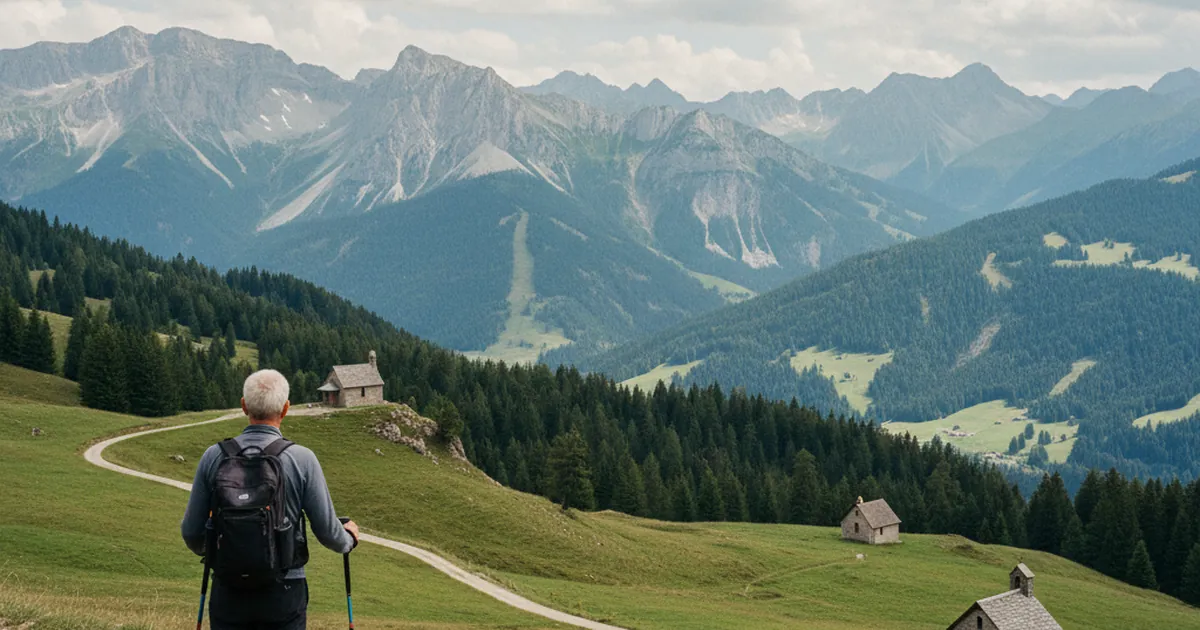
Tucked above the summer pastures, often off the main trails, mountain chapels are among the quietest markers of Haute-Savoie's landscape. They have endured for centuries with little fanfare, kept alive by mountain families whose names have sometimes faded from memory. Hike long enough in the area, and you will come across one sooner or later. Here is what you need to know.
Why chapels in the mountains?
For centuries, families in the Savoyard highlands practised seasonal transhumance: they moved up to the high pastures at the start of June with their herds and came back down in autumn. These stays lasted months at a time. Making the long trip down to the valley for Sunday mass was not always possible, particularly for shepherds who could not leave their flocks unattended.
The practical solution was to build oratories, and eventually proper chapels, directly on the high ground. These structures allowed the parish priest to come up and celebrate mass once or twice a summer. They also served as gathering points for families spread across neighbouring alpages, and sometimes as shelter when storms rolled in suddenly.
The practice developed from the medieval period and carried on into the mid-twentieth century, when traditional transhumance gradually declined. Some chapels fell into disuse. Others were restored by local associations or municipalities, and still host an annual summer mass today.
Simple architecture, local stone
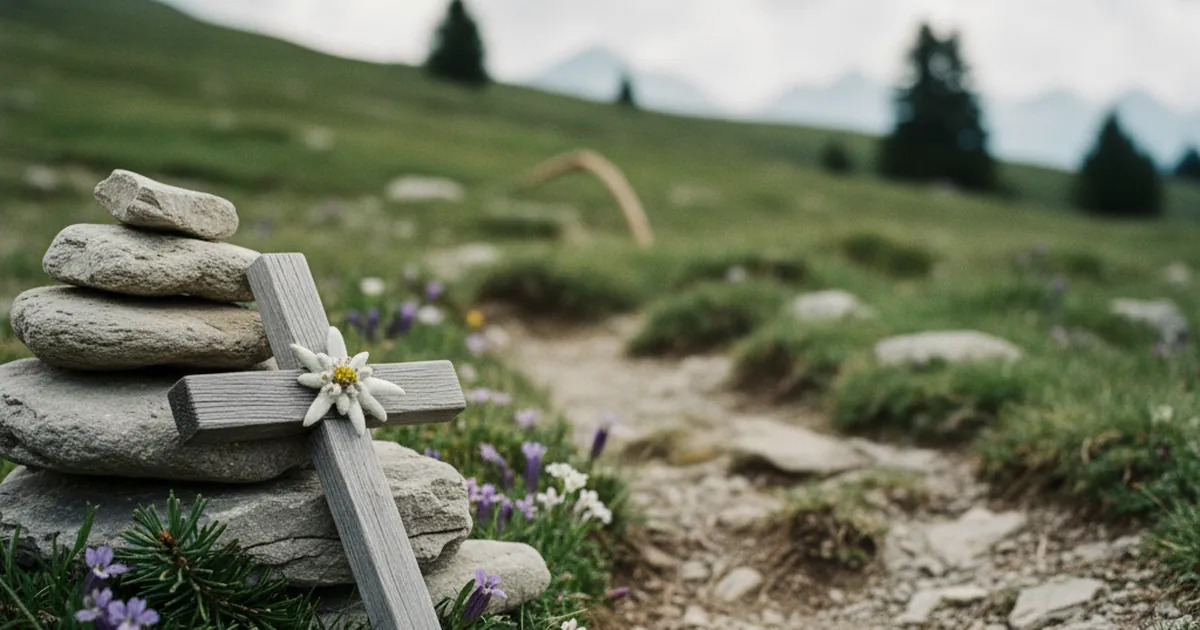
Alpine chapels look nothing like the large churches you find in the villages below. Their construction answered straightforward constraints: locally quarried stone, resistance to harsh winters, minimal maintenance requirements.
The floor plan is usually very compact: a single nave, a small altar, sometimes a statue of the Virgin or a patron saint. Walls are thick, openings few. The oldest examples have roofs in stone slabs (lauzes) or wooden shingles. Some still have a small bell that once marked time for the farmhands up on the pasture.
The chapel names often hint at their dedication: Our Lady, Saint John, Saint James, or local figures now largely forgotten from the official calendar.
Jacquicourt: a well-known chapel in the Giffre valley
In the Giffre valley, the chapel of Jacquicourt is one of the most accessible on foot, with two marked trails to choose from.
The first leaves from Verchaix via the Les Lanches path: the Jacquicourt chapel via Les Lanches route is a moderate-level outing of just under three hours of actual walking time.
The second departure point is outside Taninges, on the Loëx side: the Loëx variant is shorter and rated very easy, open to nearly anyone including families with children used to walking.
The chapel itself is a modest, well-restored building overlooking the surrounding pastures. It illustrates perfectly the tradition of high-altitude construction characteristic of this part of the Savoyard mountains.
Other religious sites worth exploring
Beyond the Giffre, other parts of Haute-Savoie have chapels or ruins with a religious character woven into hiking itineraries.
In the Bauges massif, the Tours Saint-Jacques above Allèves are a remarkable site. These ruins, linked to the cult of Saint James, point to a long-standing religious presence on the heights of the massif. The path leading up is short and easy: a good option for a late-afternoon outing.
In the Chablais and the Aravis-Bornes area, you will also find oratories and small isolated chapels, usually marked on IGN maps with a small black cross. They rarely anchor a dedicated hiking circuit, but they appear along many trails as quiet waypoints worth a brief stop.
Practical tips for combining heritage and hiking
If you want to mix religious heritage with mountain walking, a few things to keep in mind.
- Check the IGN 1:25,000 map before heading out. Chapels, wayside crosses, and oratories are usually marked.
- Ask the local tourist office or municipality about the dates of summer masses. It is a rare chance to witness a genuine slice of mountain community life.
- Many chapels are unlocked or simply left on the latch. Be respectful inside: no noise, and avoid intrusive photography if others are there quietly.
- Some buildings are fragile. Do not lean on the walls, take nothing away, and put back any votive objects you find out of place.
A living heritage
Contrary to what you might assume, many of Haute-Savoie's mountain chapels are not frozen relics. Volunteers maintain them, local associations organise annual clean-up days, and families with deep ties to a site keep watch across generations.
Hiking in Haute-Savoie, you sometimes pass within a few metres of one of these chapels without realising it. Look up, check the trail markers, and glance at your detailed map. You may well be surprised by what you find.