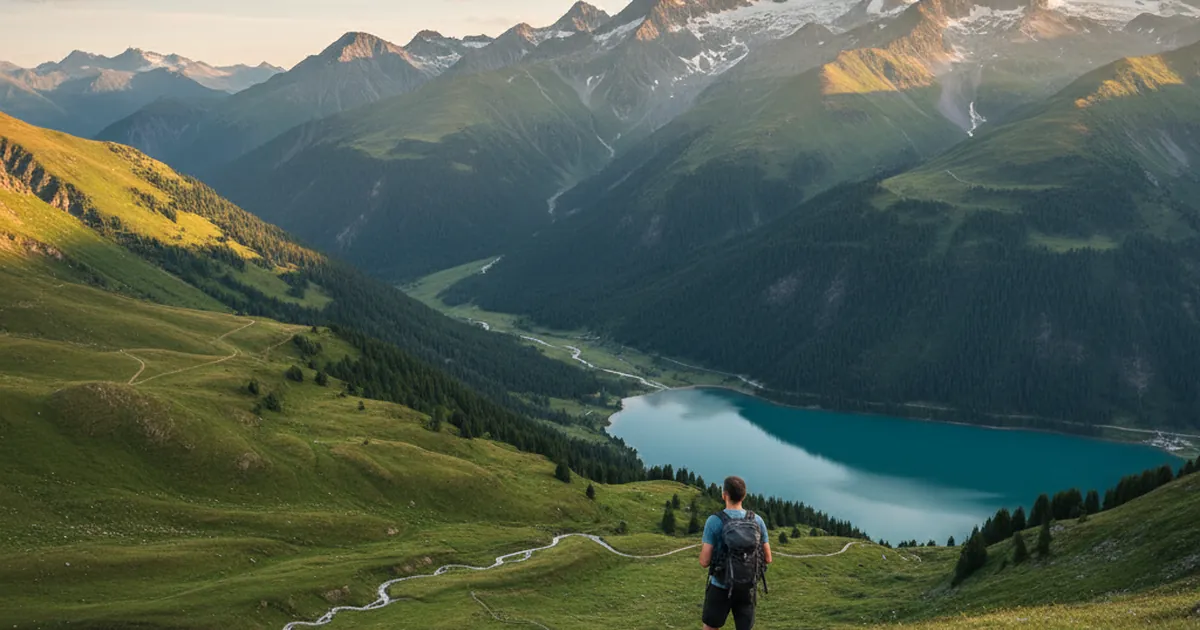
Backpacks, waterproof jackets, trekking poles: hikers debate gear endlessly, yet footwear rarely gets the attention it deserves. On the trails of Haute-Savoie, your shoes are the only permanent point of contact between you and the ground. Choose wrong and you end up with blisters at the halfway mark, a weakened ankle on a rocky descent, or a slip on wet rock. This guide gives you the practical markers to choose correctly based on the terrain you will actually encounter.
Low-cut, mid-cut or high-cut: three categories, three terrains
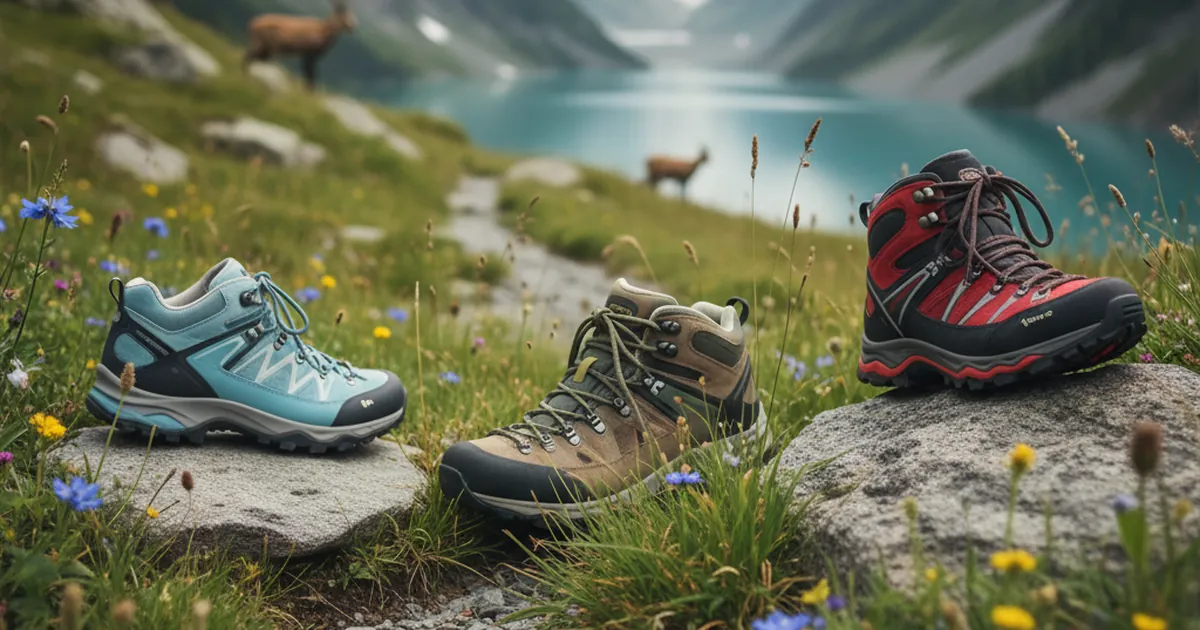
Not all hiking shoes are built alike. The first visible difference is the height of the upper, the part that wraps around the ankle. Three main families cover most situations.
Low-cut shoes
Light and breathable, close in feel to a reinforced trail runner. They are well suited to clear paths, forest tracks and outings on stable terrain with no exposed sections. On a route like the Boucle du Reray from Bonneville (accessible terrain, 424 m of positive elevation gain), low-cut shoes are perfectly adequate. The trade-off is minimal lateral ankle support on uneven ground.
Mid-cut boots
Rising just above the ankle bone without reaching the calf, mid-cut boots are the most versatile option for classic alpine hiking. They provide decent lateral support while staying relatively light. On mixed terrain combining grassy paths, rocky sections and some loose stones, they cover most situations well. Most hikers who regularly explore the uplands of the Chablais or the forests of the Giffre valley find them ideal.
High-cut boots
Tall and supportive, high-cut boots provide the best ankle hold on technical terrain. They are the right choice for demanding outings: long scree fields, alpine passages, early-season snow patches and significant elevation changes. For a route like the Pointe de Nantaux from Montriond (1,145 m of positive elevation, maximum altitude 2,164 m, rated difficult), high-cut boots are clearly the right tool.
What terrain in Haute-Savoie tells you
Haute-Savoie offers exceptional terrain diversity depending on the massif and altitude. At lower elevations you often find well-maintained trails, meadows and pleasant forests. Above roughly 1,500 m, the picture shifts: scree fields lengthen, paths narrow, and limestone or crystalline rock demands real grip.
On routes rated difficult (summits, high passes, exposed ridges), a high-cut boot with a stiff sole stops being a luxury and becomes a genuine necessity. Not to follow an arbitrary rule, but because the difference in safety and comfort is real as soon as you move into alpine terrain.
If you plan to hike around Montriond, for example, you will regularly face significant elevation changes and open, sometimes airy passages. Your footwear needs to match the planned itinerary, not just feel comfortable in the shop.
Sole and stiffness: two criteria hikers underestimate
The height of the upper is only part of the picture. Two other criteria play a major role in comfort and safety.
- The sole: look for well-defined lugs with deep tread for grip on wet or muddy ground. On dry rock, quality soles generally provide good adhesion. On wet rock, even the best sole calls for caution and measured footwork.
- Stiffness: a flexible sole feels pleasant on flat ground but exhausting on long scree traverses where every stone presses directly through to the foot. A stiffer sole distributes load across the rocks and reduces muscular fatigue. This factor often explains the difference in comfort at the end of a demanding day.
If you use trekking poles on technical sections, pair them with boots that are stiff enough: together they genuinely improve balance and reduce fatigue on steep descents.
Sizing, socks and lacing
One frequently overlooked detail: sizing. Feet swell after several hours of effort. Going half a size to a full size up from your everyday shoes is standard practice. Try boots late in the day, wearing the hiking socks you will actually use, and verify that your toes do not press against the toe cap on long downhill sections.
Lacing deserves equal attention. Poor adjustment creates pressure points, blisters and insufficient ankle support. Some models offer a split lacing system separating the forefoot zone from the ankle zone, allowing a much more precise fit for each foot shape.
Caring for your boots to keep them performing
Properly maintained boots last noticeably longer and retain their waterproofing and grip. A few simple habits make the difference:
- Clean the soles after every outing (embedded stones accelerate rubber wear).
- Dry at room temperature, away from direct heat sources such as radiators.
- Apply a waterproofing treatment suited to the material: leather, synthetic or Gore-Tex membrane.
- Check stitching and bonding before any long outing, especially at the start of the season after a storage period.
Choosing boots that match the terrain you will actually cover is a decision made once but felt on every hour of walking. In Haute-Savoie, the range of terrain from valley floors to alpine summits makes it worth thinking through carefully before setting out, particularly if you are targeting high-altitude routes. Take the time to try several pairs, get advice from a specialist, and resist the pull of a good-looking boot that simply does not match what you will actually do in the mountains.