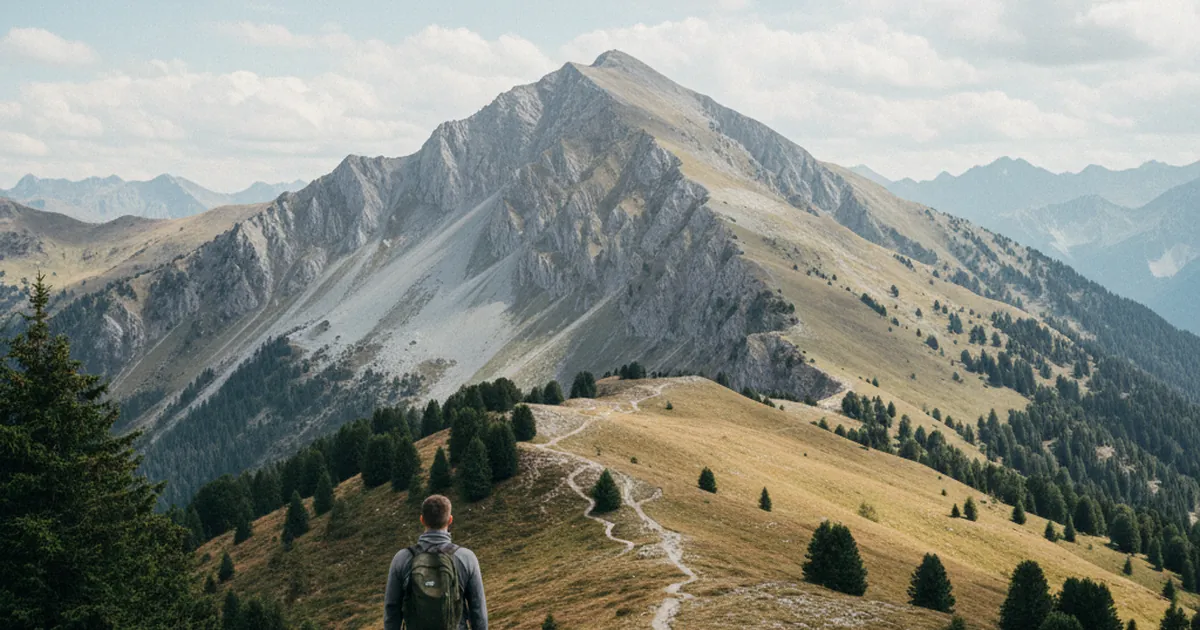
Rising above the Giffre valley and the heights of Morzine, the Tête de Bostan reaches 2,400 metres. This summit in the Chablais massif is worth the effort not only for its views over the French-Swiss Alps, but also for the singular history etched into its slopes. The ground you are about to walk was worked, dug and exploited long before hiking became a leisure activity. Here is what to know before heading up.
What does Bostan mean?
The place name "Bostan" refers to the high-altitude pasture that stretches below the summit, between the communes of Morzine and Samoëns. In old Franco-Provençal, the word points to a mountain grazing ground, an upland summer pasture. Nothing exotic: it is a place name that simply describes what it is, mountain terrain, livestock, short summer grass. The word "Tête" (head) in the name denotes the summit that crowns the whole area, in the most literal sense.
This kind of toponymy is common throughout Haute-Savoie. The mountains here do not carry romantic names by tradition. They bear the traces of the agro-pastoral practices that shaped life in these valleys for centuries. The Col de Bostan, at 2,290 metres, shares the same name and belongs to the same geographic unit.
The Gold Mines: a mark left in the mountain
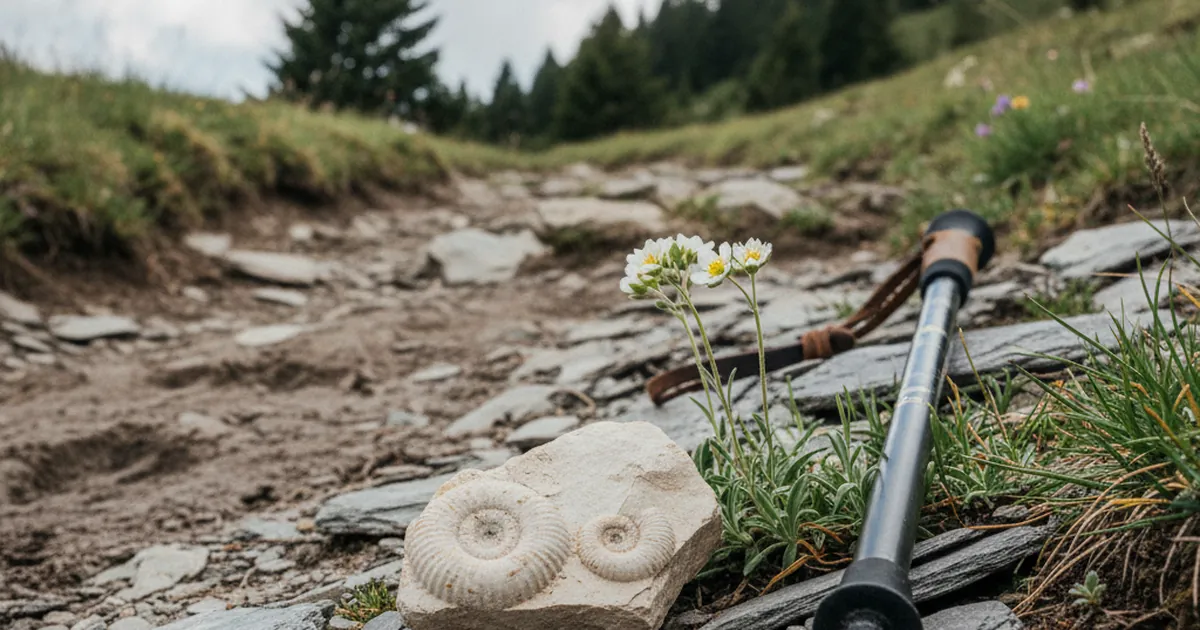
What gives the Bostan area a particular character is the historical presence of the Gold Mines. The name might come as a surprise: gold mines in Haute-Savoie? In practice, the resources being sought were a variety of metal ores, and the "gold" in the name owes more to local tradition than to strict geological fact. Galleries were carved into the rock to extract what the mountain held deep within. Today, these old workings form a notable landmark on the hiking trails: you walk past gallery entrances and read the traces of human activity in the mineral landscape.
This mining legacy explains why several routes in the area share the same suffix: "par les Mines d'Or" (via the Gold Mines). It is not a picturesque label added to attract tourists. It has become a genuine geographic reference, embedded in local usage for generations.
What you see from the top
From the Tête de Bostan, the view opens towards the Franco-Swiss border ridges to the north-east. On a clear day, the Swiss summits stand out sharply on the horizon. To the south, the alpine ranges extend in full. To the west, the Giffre valley traces its green corridor far below, hemmed in between the ridges.
The Col de Bostan, at 2,290 metres, is a natural crossroads for anyone completing a loop or traverse through this area. From there, routes diverge: towards the Golèse on one side, towards the slopes above Morzine on the other. The whole summit plateau, between 2,100 and 2,400 metres, is open and exposed: in strong wind or if a storm moves in, there is no shelter.
Routes to the summit
Several hikes lead to the Tête de Bostan from different starting points. The two main options depart from the Morzine area.
- The Tête de Bostan via the Gold Mines is a 14 km loop with 1,192 m of elevation gain, rated hard. It starts from the Route de la Manche in Morzine and takes around 4h45 of sustained effort.
- The Bostan and the Golèse via the Gold Mines loop links the Tête de Bostan with the Col de la Golèse (1,660 m) over 13 km and 1,105 m of ascent. The trailhead is at Pont de Chardonnière, still within the commune of Morzine.
For a more accessible approach from the Giffre side, the "De Bostan à la Golèse" route departs from Les Allamands in Samoëns. A 10 km loop with 728 m of elevation gain, rated moderate, it does not reach the summit itself but crosses the upper valley and arrives at the Col de la Golèse at 1,660 m. A solid introduction to the area without committing to difficult terrain.
When to go and how to prepare
The recommended season runs from June to October. Outside that window, snow can persist on the upper sections and make the slopes hazardous without the right gear. For the two hard loops starting from Morzine, carry at least 2.5 litres of water per person: the terrain is exposed and reliable water sources are scarce at altitude.
- High-ankle hiking boots with a grippy sole
- Warm layers in the pack, even in midsummer
- Early start to avoid afternoon thunderstorms
- Check the forecast the evening before and again on the morning of the hike
- Tell someone your planned route before heading out
This corner of the Chablais, between Morzine and the Giffre valley, sees far fewer visitors than the headline hikes in the region. If you want to explore the trails of Haute-Savoie away from the crowds, the Tête de Bostan and its mines offer the effort, the panorama and the history: three solid reasons to make the trip.