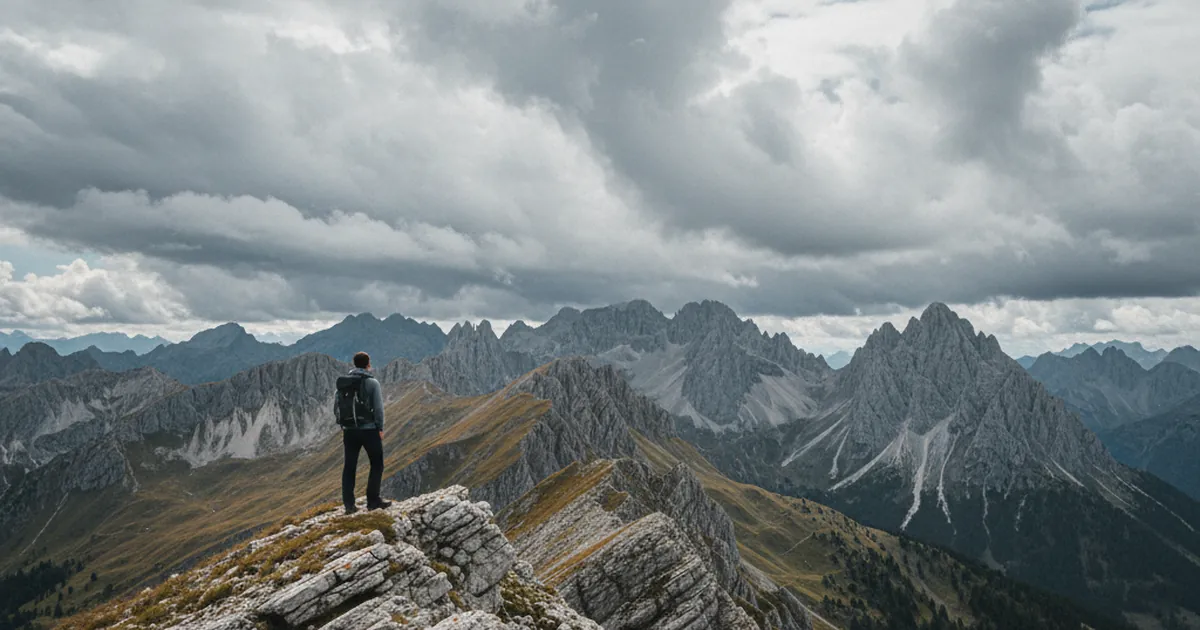
Lightning kills hikers every summer in the Alps. Not because people are reckless, but because mountain weather changes at a speed that many underestimate. A perfectly clear sky at the trailhead can turn into a violent thunderstorm before early afternoon. If that catches you on a ridge or a summit, every decision matters. Here are the reflexes that actually make a difference, as recommended by mountain guides and rescue services.
Anticipate before you leave the trailhead
The best defence against lightning is never giving it the chance to catch you off guard. Before any high-altitude outing, check the local mountain forecast. Météo France publishes massif-specific mountain bulletins that are far more precise than a generic weather app. In Haute-Savoie, convective storms typically develop in late morning on hot days and hit the summits before moving down into the valleys.
A practical rule: if forecasts show any chance of afternoon thunderstorms, plan to be below the treeline by noon. When hiking in the Haute-Savoie mountains, this time constraint is especially important on routes that reach exposed ridges or summits.
Also remember the 30/30 rule: if the gap between a lightning flash and its thunder clap is less than 30 seconds, the storm is within 10 kilometres. Seek shelter immediately. After the last thunder, wait a full 30 minutes before resuming your hike.
Reading the warning signs in the field
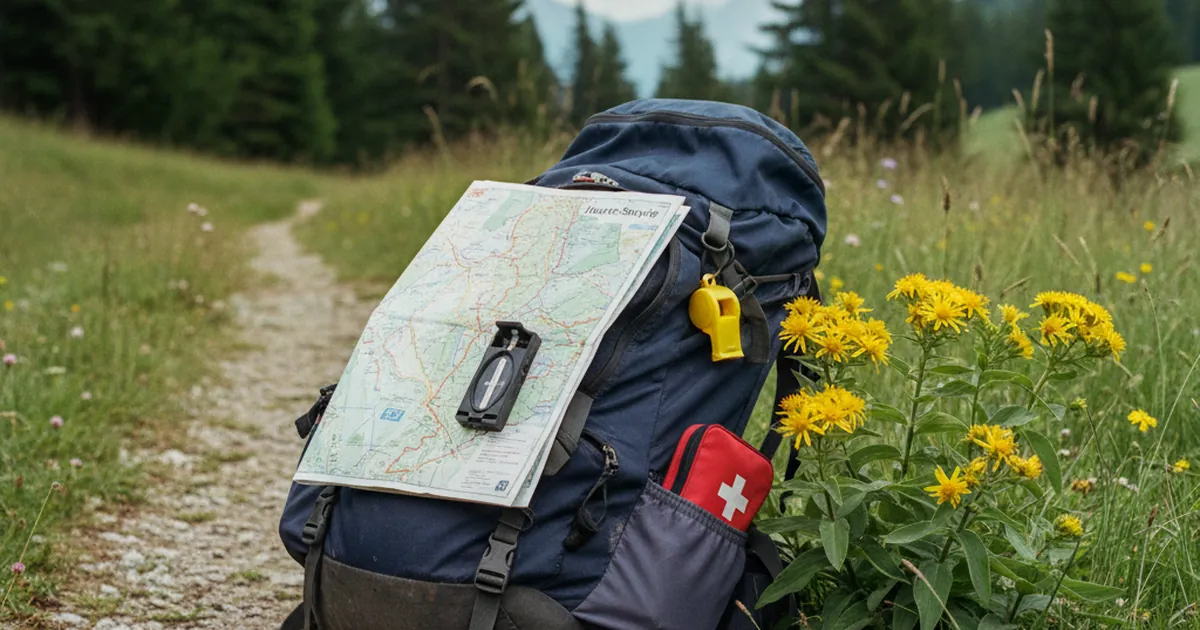
Thunderstorms often give a few minutes' notice. Learning to read these signals can get you out of a dangerous situation.
- Cumulus clouds build rapidly into towers or anvil shapes above the ridgeline.
- The air feels electric: your hair stands on end, the hairs on your arms rise.
- A buzzing or humming sound comes from metal trekking poles or an ice axe.
- A faint sharp smell of ozone sometimes precedes strikes.
If you notice any of these signs, especially the first two, a strike may be seconds away. Do not stop to pack your bag. Act immediately.
The right moves when a storm catches you in the mountains
Here is what to do, in order.
- Get off the ridge or summit immediately. The higher and more exposed you are, the greater the risk. The goal is to leave elevated terrain, not to find shelter on the spot.
- Drop all metal gear away from yourself. Trekking poles, ice axes, metal-framed backpacks: set them down about ten metres away, clear of the group.
- Stay away from isolated trees. A lone tree in an alpine meadow is one of the most dangerous spots. Lightning strikes it preferentially, then the current spreads through the roots and soil for several metres around.
- Spread out within your group. If several people are hit by ground current from the same strike, the entire group can be incapacitated. Keep five to ten metres between each person.
- Take the lightning crouch position. Squat on the balls of your feet only (heels off the ground), feet together, arms wrapped around your knees, head down. This minimises your contact surface with the ground and reduces exposure to ground currents.
- Find flat, open ground slightly below a ridgeline. A shallow hollow or depression in the terrain is a good compromise if you cannot descend quickly.
Classic mistakes that make things worse
Some instinctive reactions are actually the wrong move.
- Taking shelter under a rocky overhang. Overhangs and small alcoves in rock can produce a return arc. The discharge runs along the wet rock face and can jump to anyone sheltering underneath.
- Assuming any cave is safe. A large, deep cave with a dry floor can be relatively safe as long as you stay in the centre away from the walls. A small niche or alcove is dangerous.
- Lying flat on the ground. Counterintuitive, but lying down increases your contact surface with the ground and raises your exposure to ground currents. The lightning crouch is far safer.
- Using your phone during the storm. A mobile phone does not attract lightning, but it is better to save your energy for an emergency call after the storm has passed, not during.
Choosing routes with storm risk in mind
Some itineraries are inherently more exposed to lightning by their nature. Ridge traverses, summit ascents, and routes that cross open terrain without a refuge or quick escape route nearby require extra attention to the weather. The Pointe de Nantaux and the Pointe de Ressachaux in the Chablais are good examples: accessible alpine objectives that leave you on open, exposed ridgelines near the top with limited fast-descent options. On this kind of terrain, starting early and watching the sky constantly is not optional, it is a requirement.
Staying safe from lightning is not about luck. It is a discipline built before you leave, through checking the forecast, and on the terrain, through observation. The mountains of Haute-Savoie offer some of the finest trails for hiking in the Alps, and they deserve to be explored with every card on the table. Learn the skills, talk to experienced hikers and mountain guides, and never hesitate to turn back. The mountain will still be there tomorrow.