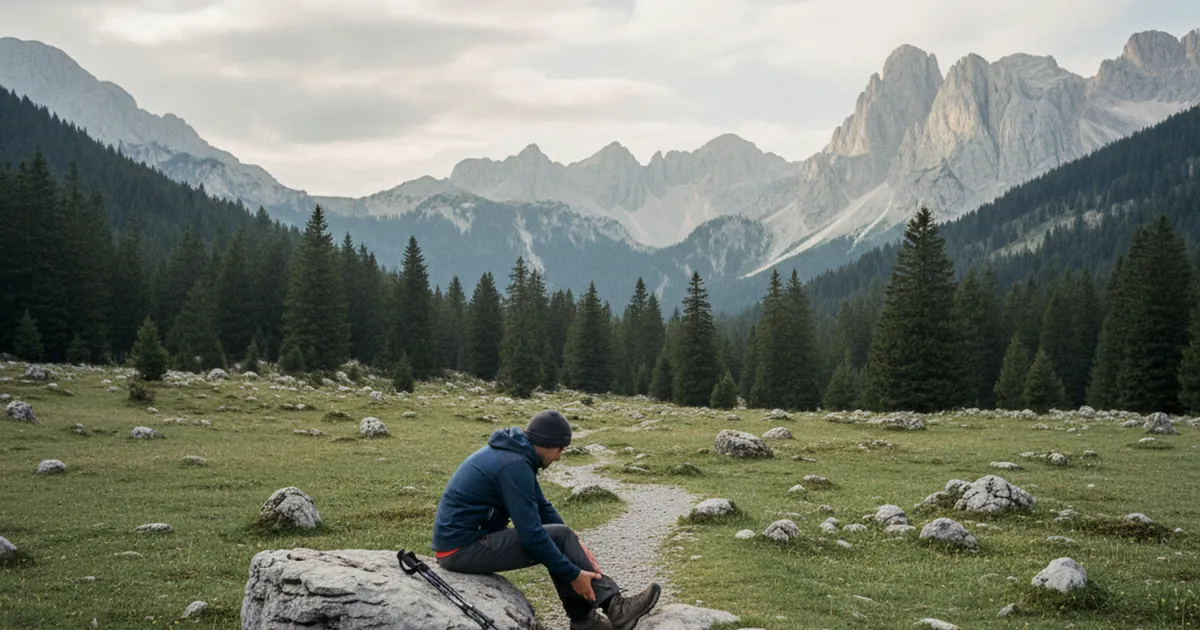
A misplaced step on a root, a loose stone, a slippery descent after rain. A sprained ankle is one of the most common accidents on the trail, and it rarely happens close to the car park. On the mountain paths where you can hike in Haute-Savoie, several hours may separate the incident from the nearest road access. Knowing what to do in the first few minutes genuinely changes the outcome.
Don't stand up immediately
The first instinct is usually to get back on your feet, out of reflex or pride. That's a mistake. Right after the trauma, adrenaline can mask real pain. Stay seated or lie down for a few minutes. Observe. Is the pain localised around the ankle, or does it radiate up into the calf or toward the forefoot? Did you hear or feel a distinct crack? A sharp crack, precise bone pain along the fibula or foot bones, or a visible deformity are serious signs pointing toward a fracture rather than a simple sprain.
Assessing the injury on the spot
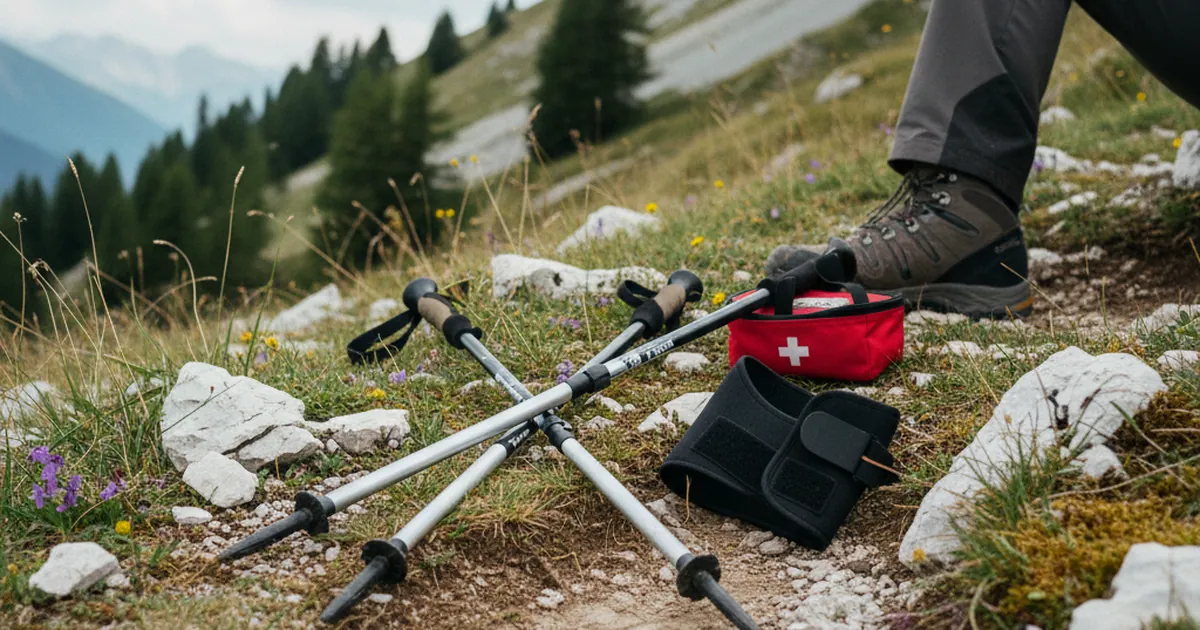
Sprains are graded by severity based on the extent of ligament damage. You can't make a precise diagnosis in the field, but you can run a few checks:
- Try moving the ankle slowly in gentle circles. If movement is possible despite the pain, that is a relatively good sign.
- Place the foot flat on the ground without putting weight on it. Feel whether contact triggers sharp pain on a specific bone or only in the soft tissue around the malleolus.
- If you can stand and take a few painful steps, the sprain is likely grade 1 or 2. If any weight-bearing is unbearable or impossible, suspect a fracture until proven otherwise.
Do not attempt a long test walk to see if it settles. By the time you realise it is getting worse, you may be too far from help to call for rescue.
First-aid steps in the field
Even without a complete first-aid kit, you can do a lot with what is already in your pack.
- Compression: if you have an elastic bandage, wrap it firmly around the ankle starting from the foot and working up toward the lower calf. Compression reduces swelling and stabilises the joint. A strip of fabric or a buff can work in a pinch.
- Elevation: sit down and prop the ankle on your pack, slightly raised. This slows the build-up of fluid.
- Cold: if you have snow or cold stream water nearby, a damp cloth held on the ankle for a few minutes eases pain and inflammation. Never apply ice directly to the skin.
- Painkillers: if you carry paracetamol, take the standard dose now. It will make whatever comes next more manageable.
Walk out, wait, or call for rescue?
This is the hardest call, and it depends on several factors: the time of day, the terrain ahead, the size of your group, and your actual ability to bear weight.
If you can put weight on the ankle and the return route is short and technically straightforward, walking back carefully is usually the right choice. Trekking poles become essential: use both, let the injured ankle carry as little load as possible, and take all the time you need.
If the return involves a long descent, rocky sections, or significant elevation loss, think carefully before committing. A poorly managed sprain can go from grade 2 to grade 3 under load. Waiting for outside assistance on the spot is often wiser than aggravating the injury halfway down.
If you cannot walk at all, or suspect a fracture, call for rescue. In France, 112 works wherever there is any mobile signal, however faint. Mountain rescue (PGHM) can respond by helicopter when necessary. Give your position as precisely as possible: trail name, approximate altitude from your GPS or altimeter, last visible landmark. Stay on the line if the signal is unstable.
For longer routes in less-frequented areas, such as the Tour du Mont d'Orchez or La Ferme de Bémont par le GMé, always note the emergency number before you leave and make sure your phone has a full charge.
Preparation before you head out
The best management of a mountain sprain starts when you are packing your bag at home.
- An elastic bandage takes up almost no space and weighs next to nothing. It is useful for both prevention and emergency treatment.
- Ankle-high boots with solid lateral support significantly reduce the risk on uneven ground.
- Telling someone your planned route and estimated return time costs nothing and can trigger an alert if you do not come back.
- Checking the forecast before every outing matters: wet terrain or rain-slicked descents multiply the risk of a bad step.
In areas like the Giffre valley or the Aravis-Bornes, trails are well marked but some sections remain far from any road access. Knowing these basics means you can usually walk out under your own steam, and handle the more serious situations with a clear head.
A sprained ankle in the mountains is not the same as one in the city. Terrain, time of day, remaining distance: all of it feeds into your decision. Taking five minutes to assess calmly before acting is often the difference between walking out on your own and waiting for a rescue helicopter. The right reflexes are built before you leave, not under pressure.