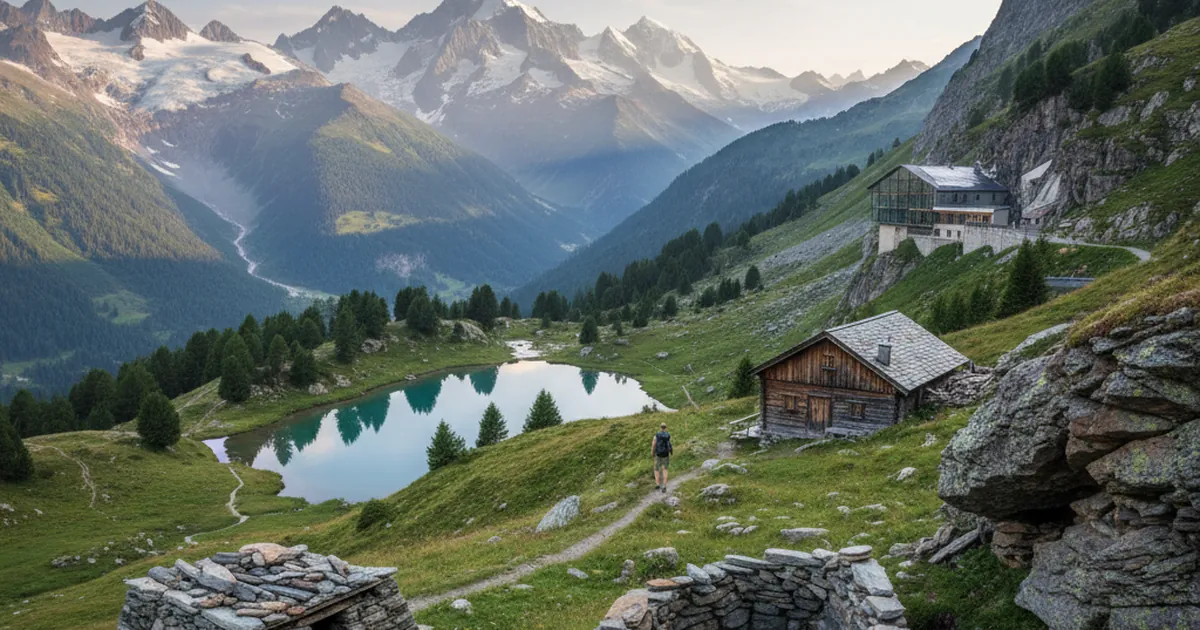
In Haute-Savoie, mountain refuges are as much a part of the landscape as the peaks themselves. When you push open the door of a staffed refuge after hours of hiking, you're stepping into a tradition that stretches back long before mass tourism. From rough shelters built by medieval shepherds to solar-powered modern buildings, the history of Alpine refuges is the story of an ever-evolving relationship between people and the high mountains.
Before refuges: shelters out of necessity
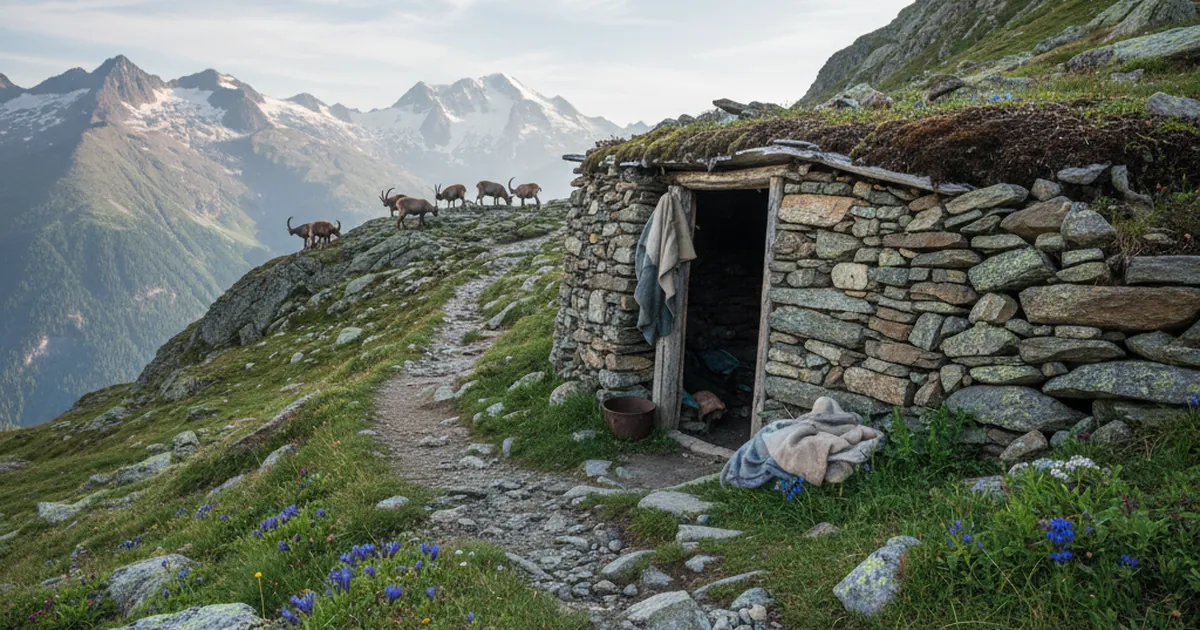
For centuries, the people moving through the high mountains weren't hikers looking for views. They were shepherds driving flocks to summer pastures, hunters tracking chamois or ibex, smugglers crossing passes to avoid customs officers. All of them knew the rock overhangs, natural caves and shallow grottos that could provide basic shelter for the night.
Shepherds also built dry-stone huts on the high pastures. These structures had nothing in common with modern comfort: four walls, a roof that could handle snow, a space for the men and often the animals. The goal wasn't leisure. It was survival in the face of Alpine conditions.
The 19th century and the birth of institutional refuges
The second half of the 19th century marks a turning point. Alpinism emerges as a sporting and scientific pursuit. Explorers, naturalists and adventurers begin organising expeditions to the highest summits. To reach these peaks, they need stopping points at altitude, places to spend the night before tackling the most committing routes.
In France, the creation of the Club Alpin Français in 1874 provides a decisive push. The CAF quickly takes on the construction of refuges across the main Alpine massifs. These early structures are often modest: a few stone walls, a sleeping area with straw or basic blankets, sometimes a stock of firewood. No warden. The rule is simple: leave the place as you found it. These primitive refuges nonetheless play a fundamental role, letting climbers get close to the summits without having to sleep in the open snow.
The 20th century and the democratisation of the mountains
The post-war decades open the mountains to a much wider public. Paid holidays, introduced in 1936 and gradually extended, transform leisure habits. Hiking develops into an activity accessible to a broad section of the population.
Refuges adapt accordingly. Wardens are posted there through the summer season to welcome walkers, cook hot meals and share information about local conditions. Dormitories replace undivided sleeping spaces. A refuge culture takes shape: respect bedtimes, keep quiet at night, leave your boots at the door.
By the 1970s and 1980s, mass hiking is firmly established. Long-distance Alpine routes attract walkers from across Europe. Refuges have to manage significant foot traffic, expand their capacity and professionalise their operations. The role of refuge warden becomes a structured trade, often passed down within mountain families from one generation to the next.
Today: balancing comfort and altitude constraints
The 21st-century refuge has to reconcile conflicting expectations. Modern hikers want comfort: clean bedding, quality meals, power outlets to charge phones. At the same time, the constraints of altitude haven't changed: no road access, no mains electricity, and sometimes scarce water by late summer.
Technical solutions keep multiplying. Solar panels power lighting and basic equipment. Rainwater collection systems reduce dependence on local springs. Waste is sorted, compacted and brought back down by porters or helicopter. Some refuges have earned environmental certifications recognising their commitment to responsible management.
Wardens remain central to the whole system. Equally at home discussing weather conditions and local routes, they provide welcome, safety and cultural continuity. Many track the terrain year to year: retreating glaciers, changing springs, destabilising couloirs. Without claiming the title, they are valuable witnesses to climate change at altitude.
Hiking to a refuge in Haute-Savoie
If you want to experience refuge life, Haute-Savoie has plenty of options. The Giffre valley concentrates several staffed refuges accessible as day trips or as stages on multi-day routes. The Chablais area also offers approaches at various levels for hikers looking to ease into the experience.
For a first taste, the Refuge de la Golèse via the Mines d'Or route from Morzine is accessible even to occasional hikers and reaches a staffed refuge without requiring a huge commitment. For something more ambitious with high-mountain scenery, the Lac de Gers, Refuge de Sales and Tête Pelouse circuit from Sixt-Fer-à-Cheval is a demanding outing that rewards every step of the effort.
In both cases, book ahead: staffed refuges in Haute-Savoie fill up fast in July and August. Most accept online reservations through their management organisation's website.
Every refuge has its own history, its own traditions, its own wardens. Some have been welcoming hikers for more than a century. All share the same core purpose: shelter and a fixed point in a demanding, unpredictable environment. If you're looking to hike in Haute-Savoie in a different way, a night in a refuge is one of the best ways to truly understand what the mountains have to offer.