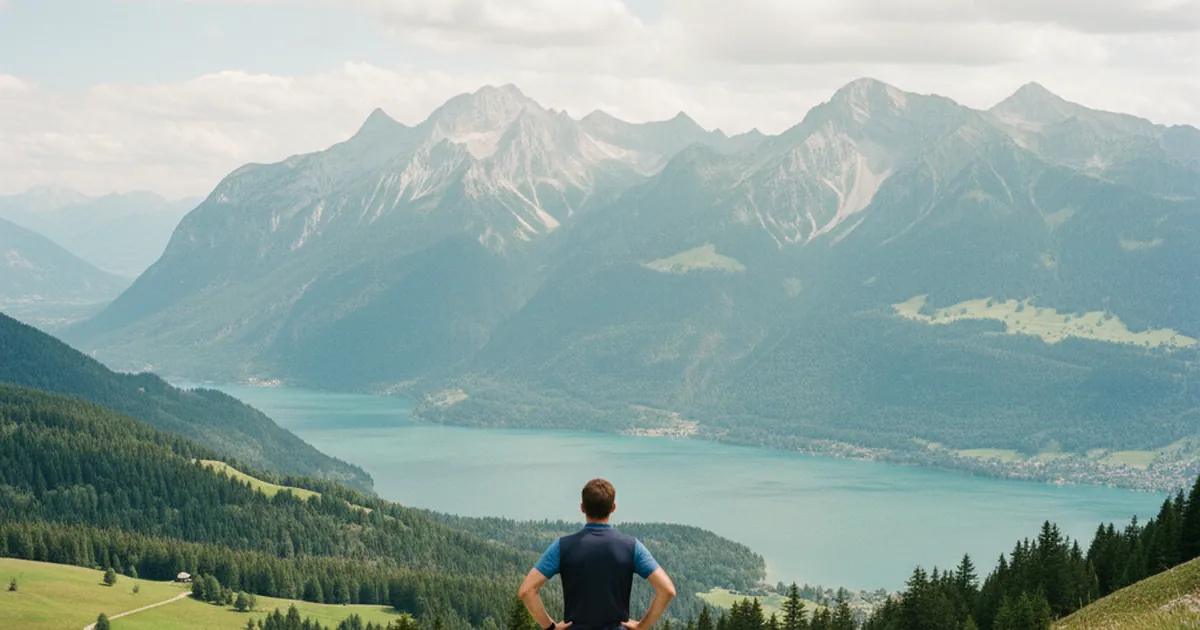
Lake Annecy draws hikers from across the region every summer. The scenery is among the finest in the Alps, the trails are varied, and you can set off directly from the city centre or from a quiet Bauges hamlet depending on what you are looking for. This overview covers the full range, from easy lakeside walks in Haute-Savoie to more demanding ascents high above the water.
Along the lake: forest and villages
The western shore between Annecy and Duingt is the most visited. Well-maintained paths follow the waterline for several kilometres, open year-round and easy enough for light footwear. For families with young children or anyone after a short, flat outing, this is the obvious starting point.
The eastern shore is wilder. Between Menthon-Saint-Bernard and Talloires, the trails leave the road quickly and climb into the woods. You move from one viewpoint to the next, with the lake below and the ridgelines opposite. Less crowded, more shade, and a very different feel from the other side.
Staying in Duingt, the village at the lake's narrowest point, gives you easy access to both shores on foot. It works well as a base if you want to explore the area without relying on a car for every outing.
Mont Veyrier and Mont Baron: the classic ascent
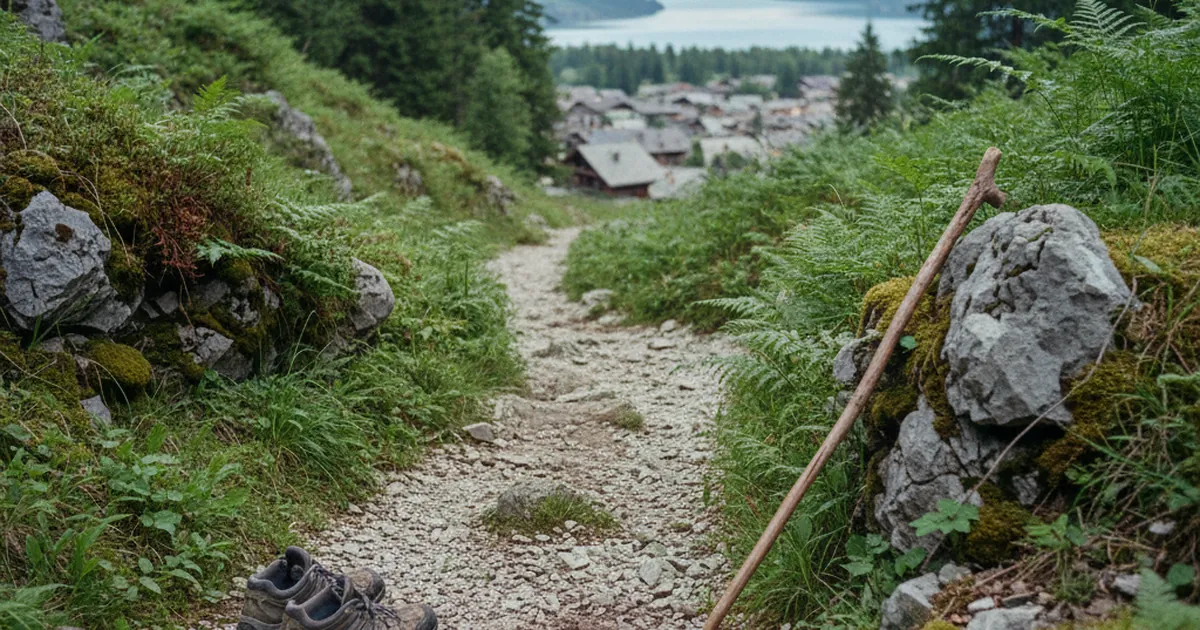
This is the signature outing for anyone wanting altitude without driving far from Annecy. Mont Veyrier and Mont Baron start from the upper neighbourhoods of the city, climb through forest, and open onto a ridge with a direct view over the lake below.
The path is well marked, but the ridge is exposed to wind. In summer, start early: the car park fills up fast and the heat builds quickly in the forested climb. Autumn afternoons bring exceptional light on the water. This is not the wildest trail in the area, but it is one of the most rewarding for first-time visitors to the lake.
Semnoz: the overlooked plateau
Just south of Annecy, the Semnoz is a forested plateau that offers a very different experience. No lake below, no dramatic ridgeline: you walk through trees, pass by mountain chalets, and on clear days catch a glimpse of Mont Blanc on the horizon. It is gentler, quieter, and often far less visited than the lakeside routes.
The walk up to Crêt de Châtillon is the best-known route in this area. It can be done in snowshoes in winter, making it a useful off-season option. For locals, the Semnoz is a regular escape, a nearby playground that sidesteps the crowds along the lake. If you have a few days in the area, it makes a good complement to the busier itineraries.
The Bauges: a different hillside, a different mood
Cross to the other side of the ridge and the landscape changes completely. Tourism thins out, trails become quieter, and villages like Gruffy hold onto a rural character that has largely disappeared from the busier lakeside areas. Some of the most enjoyable hikes in the whole sector are hidden here.
The Grotte des Maquis trail from Gruffy is a good introduction to this side: a path that combines forest, local history and an open viewpoint, with very little foot traffic even in peak season. If you have already done the lake classics and want something more off the beaten track, the Bauges have a clear answer.
La Tournette: going higher
The most iconic summit above the Annecy basin deserves its own section. La Tournette is approached from Talloires-Montmin via a well-marked but long and physically demanding route. The final stretch involves fixed cables and exposed sections: this is a hike for experienced walkers, not a relaxed family day out.
In high season the site gets busy. Start early to beat the heat and find a parking spot. The view from the summit across the lake and the Bauges is unmatched in the area, but you have to earn it. In uncertain weather or when conditions are unclear, stick to the lower trails: this is not a summit to improvise.
Hiking between Annecy and the Bauges means having several landscapes in one. The lakeside for easy outings, the summits for altitude, the Bauges for solitude. You could fill an entire week of walking without ever repeating yourself, and never stray more than a few kilometres from the water.