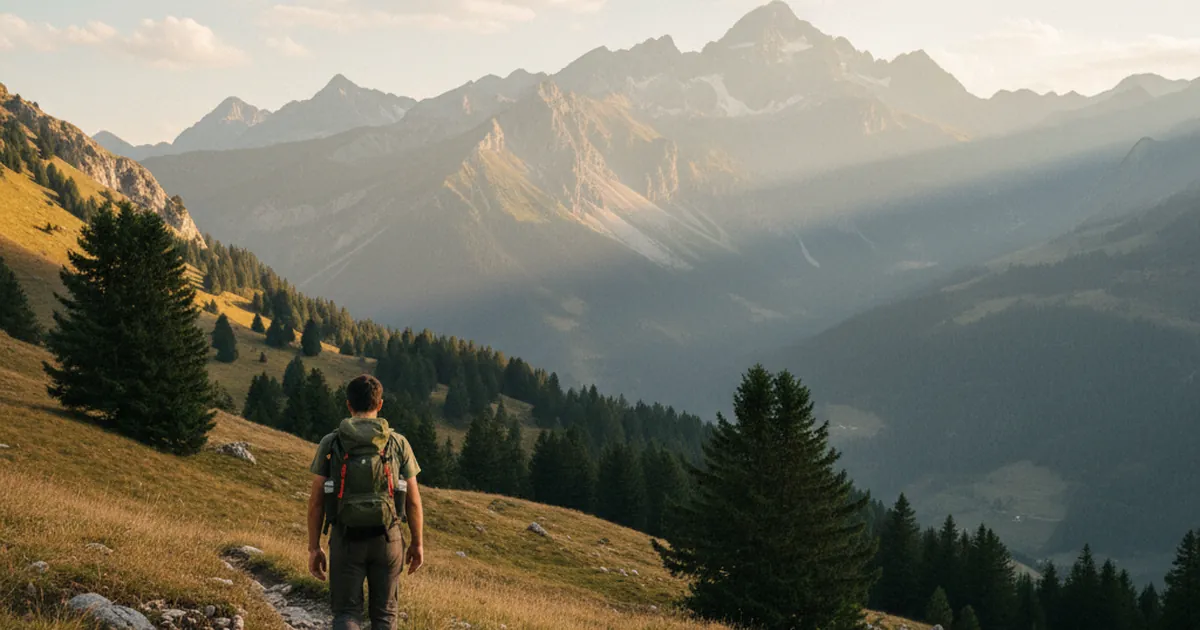
If you had to pick just one month to hike in Haute-Savoie, September would be it. The light changes. The air cools. The trails breathe again. It is the favourite month of mountain photographers, and once you have experienced it at altitude, you understand exactly why.
Light that transforms everything
In summer, the sun is high and white. It flattens relief, burns colours, and washes out contrasts. September brings a low, golden light that carves every ridge, every chalet, every dry blade of grass. In the early morning, the raking sun draws out the subtlest contours on the alpine pastures. In the evening, orange hues on the first snow-capped peaks create atmospheres that no photo filter can replicate. For those who enjoy hiking in Haute-Savoie with a camera or a smartphone, this is the window you should not miss. The 7am light in September is worth ten times the midday glare of August.
Finally, comfortable temperatures
July and August can be punishing at altitude. The heat builds fast, sweat accumulates, and gaining 800 metres of elevation in 30-degree heat is anything but pleasant. September restores some sanity. The days remain long and bright, but temperatures at the trailhead hover around 15 to 20 degrees Celsius. Up high, you find a freshness that makes every step feel lighter. Nights cool down, driving away the convective storms typical of summer. Conditions are more stable, skies much clearer.
One caveat: September is still an alpine month. First snowfall can arrive as early as mid-September above 2,000 metres. Always pack a warm layer and a waterproof jacket, even when the sky looks perfectly clear at the start.
Trails find their calm again
August is the month of saturation. Full car parks, crowded paths, mountain huts booked months in advance. September marks the end of that tourist pressure. Families have gone home, children are back at school, and trails return to what they should always be: spaces of quiet and contemplation. You can stop at the edge of a lake, take time to watch a chamois, sit on a rock without feeling like you are blocking traffic. That stillness is something to savour.
Wildlife benefits from this calm too. Animals regain confidence. Chamois and ibex are more visible, less stressed. It is also the start of the rut for deer: you can sometimes hear stags bellowing in the forests of the Vallée du Giffre in the late afternoon, a sound that truly marks the season.
Hikes to rediscover under September light
Lake loops at the golden hour
Mountain lakes are stunning in September. The water is still relatively warm at the surface, and reflections are striking early in the morning. The loop around Lac de Montriond from Ardent, in the Chablais region, is a short, accessible route that takes on a completely different character at 7am: the larches begin to turn gold, the lake shimmers, and there is no one else around yet. The village of Montriond is worth the detour for the lake alone.
Ridges for the first snow
If you want panoramas over freshly snow-dusted summits, aim for outings in late September. Fresh snow combined with the low seasonal sun produces landscapes that recall illustrations in old alpine guidebooks. The Chapelle de Jacquicourt via les Lanches route, in the Aravis-Bornes massif, offers a particularly beautiful view of the surrounding ridges at this time of year. The trail is well-marked and foot traffic in September is very light.
What to plan ahead
- Sunset comes earlier fast: it is dark by around 8pm at the start of September and by 7pm by the end. Adjust your departure time accordingly.
- Livestock guardian dogs are still present on the high pastures and protective. Keep your distance and never run. Cattle herds usually come down between mid-September and early October.
- Some mountain huts close from mid-September onwards. If you are planning an overnight stay, check each hut directly in advance.
- Weather can change quickly. Always consult a mountain-specific forecast (Météo-France) the evening before and on the morning of your hike.
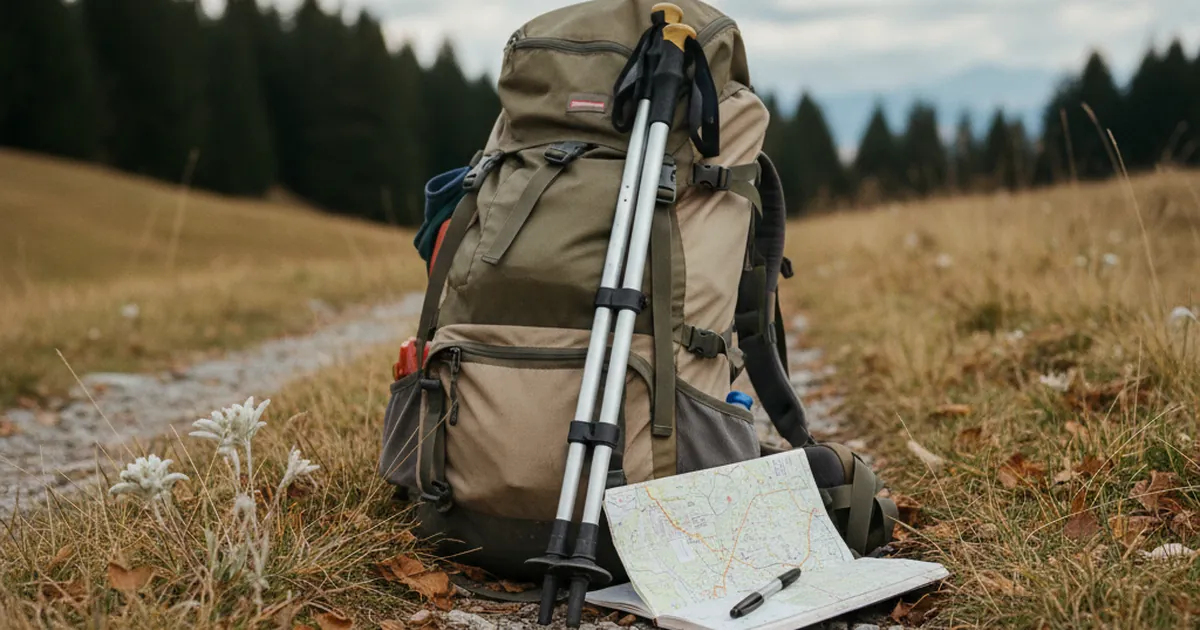
- Summer gear may be enough early in the month, but an insulating layer and trekking poles become useful once you head above 2,000 metres in late September.
September is the month when the mountains catch their breath. The light is unique, conditions are among the best of the year, and visitor numbers drop to a manageable level. If you are still wondering whether to plan a hike, now is the time to decide: this window lasts only four weeks.