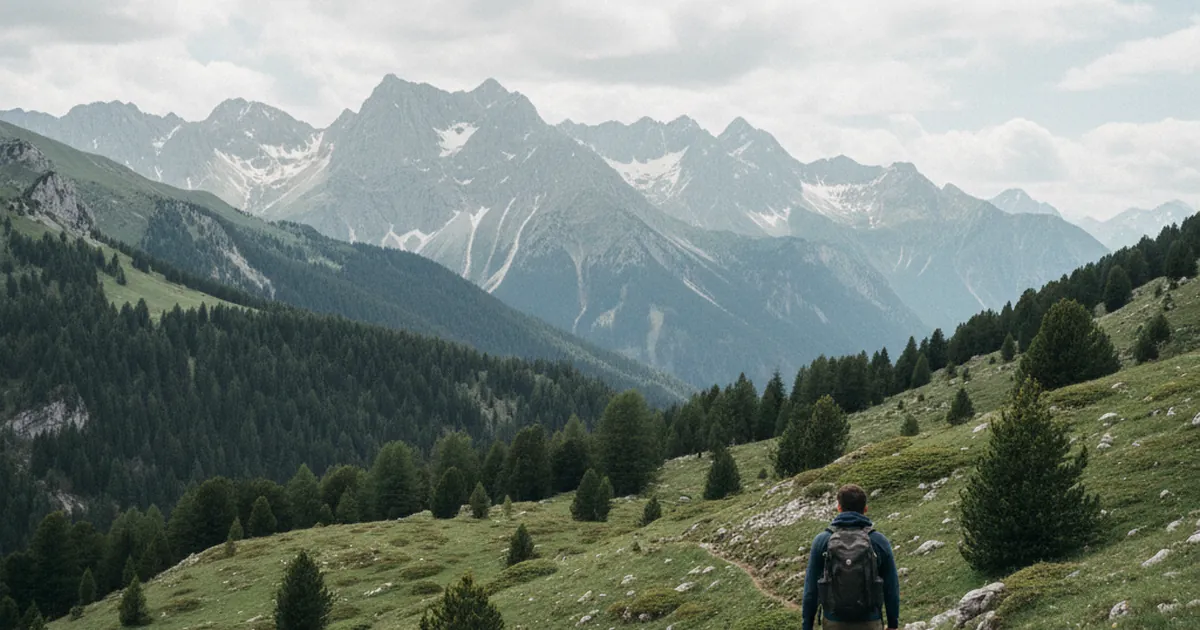
You've packed your bag, tied your boots, and checked the map. The first-aid kit? It's probably that same pouch sitting at the bottom of your bag since last season, half of it expired. When you're out hiking in Haute-Savoie, those few hundred grams can make a real difference on an alpine trail. Here's how to build a kit that's actually useful, without overloading your pack.
The absolute essentials
Whatever the length or type of your outing, short or long, family walk or demanding summit, a few items should always be with you:
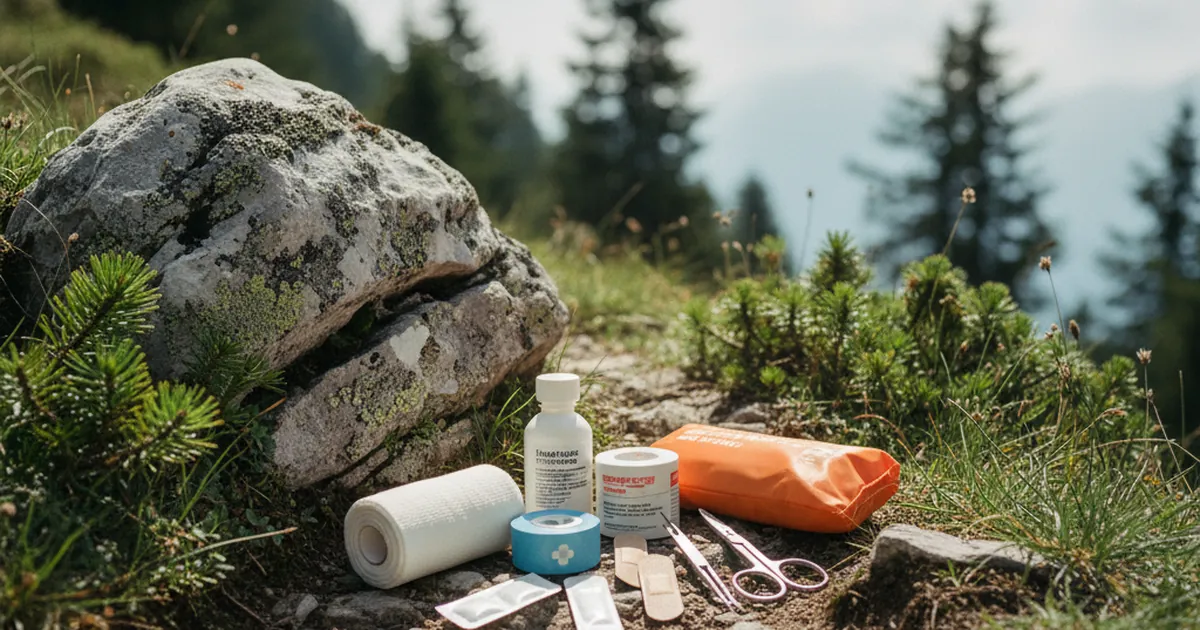
- Sterile gauze pads, 10 cm x 10 cm, at least four
- Non-woven gauze bandage, a 5 cm width is enough
- Adhesive plasters in several sizes
- Medical tape, a small roll goes a long way
- Alcohol-free antiseptic spray or single-use wipes
- Tweezers, essential for ticks which are common in forested areas
- Blunt-ended scissors
- Disposable gloves, at least two pairs
These cover the most common situations: a scrape from a fall, a light ankle sprain to compress, a small cut on rock. Everything fits in a waterproof pouch the size of a paperback book and weighs well under 200 grams.
For full-day hikes and more remote terrain
Once you're heading out for a full day with serious elevation gain or on isolated terrain, the basic kit isn't enough. A hike like Le Lac des Chambres via Folly in the Giffre Valley, or a demanding itinerary like Lac de Gers, Refuge de Sales and Tête Pelouse, keeps you away from roads for several hours. If something goes wrong, rescue teams may take time to reach you.
For these outings, add to your kit:
- A survival blanket, compact models weigh around 100 grams
- An elastic bandage, to compress a twisted ankle
- Blister plasters such as Compeed, which work best when applied at the very first sign of friction
- A painkiller such as paracetamol (follow dosage instructions and consult your doctor for any specific medical context)
What people often forget
A few lightweight items make a real difference on the trail:
- A whistle: its signal carries much further than your voice, especially in wooded slopes or when fog rolls in
- A pen and paper: to note the exact time of an incident, the symptoms you observe, or your GPS coordinates if you managed to get them
- A small headlamp: if your outing runs longer than expected, it keeps you from being caught in the dark
- Emergency number saved in your phone: 112 works across Europe, free from any phone even without credit or mobile data
That last point deserves attention. In the Arve Valley and on many high-altitude slopes, mobile coverage can be unreliable. Saving 112 in your contacts costs nothing.
How you pack it matters
A kit buried at the bottom of your bag isn't really useful. A few practical tips:
- Keep it in an accessible pocket without having to unpack everything, ideally at the top of your backpack or in a side compartment
- Use a waterproof bag or a lightweight hard case: wet sterile gauze is useless
- Check expiry dates at the start of each season, not on the morning of your hike
- Let your hiking companions know where your kit is, and ask where theirs is too
What it doesn't replace
A first-aid kit handles minor incidents. It doesn't replace proper first-aid training (a basic course takes just one day and stays useful for a lifetime) or the simple precaution of telling someone where you're going: writing down your planned route and estimated return time, and leaving that with someone at home, is one of the most effective safety measures there is.
In a serious situation, a hard fall on difficult terrain, a head injury, a suspected fracture, don't move the casualty on your own. Call 112, give your position as precisely as possible (name of the col, summit, or GPS coordinates if you have them), and keep the casualty warm with your survival blanket while waiting for rescue.
A good hiking first-aid kit isn't a field surgery set. It's a compact, lightweight pouch, checked at the start of each season and always stored in the same spot in your pack. Those few hundred grams let you handle the vast majority of trail incidents calmly, and buy valuable time while waiting for help if something more serious occurs.